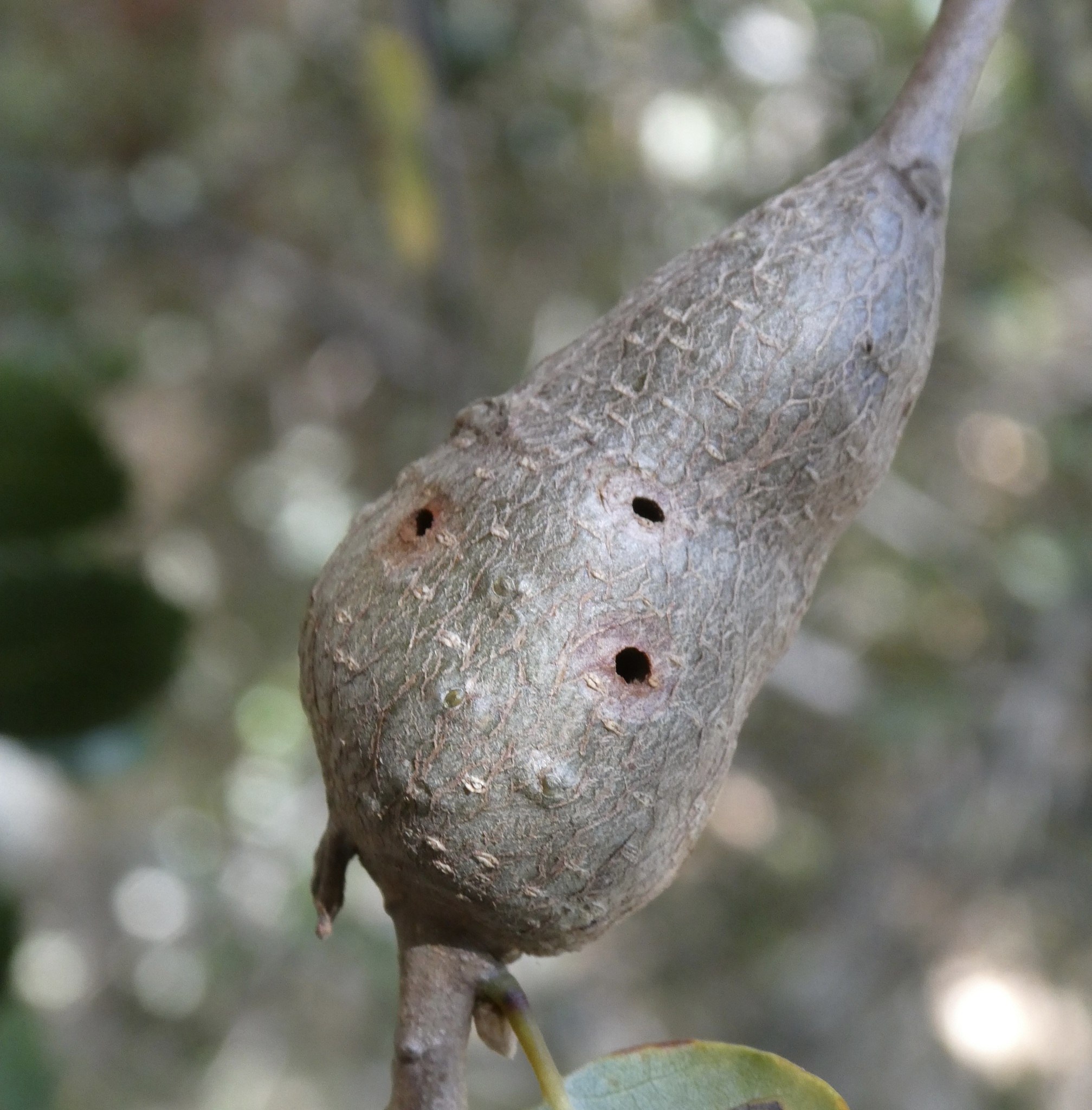
Protobalandricus spectabilis (agamic)
Hosts:
Quercus chrysolepis
/
Quercus vacciniifolia
Detachable: Integral
Color: gray
Texture: stiff
Abundance: common
Shape: spindle
Season: Spring, Summer, Fall
Alignment:
Walls: thick
Location: stem
Form: abrupt swelling
Cells: polythalamous
Possible Range:
Not an occurrence map: this shows where this gall's hosts grow. In most cases the
gall has not been documented throughout this area.
Loading map...
Synonymy (3)
| Name | Type | Notes |
|---|---|---|
| Disholcaspis spectabilis | scientific | Previous name |
| Protobalandricus spectabilis | scientific | |
| Andricus spectabilis | scientific |
Further Information (5)
Studies of some new and described Cynipidae (Hymenoptera)
- Alfred Charles Kinsey
(1922)
License: Public Domain / CC0
Cynipid Galls of the Pacific Slope
- LH Weld
(1957)
License: Public Domain / CC0
Cynipid galls of the southwest
- LH Weld
(1960)
License: Public Domain / CC0
New Pacific Coast Cynipidae (Hymenoptera)
- Alfred Charles Kinsey
(1922)
License: Public Domain / CC0
Plant Galls of the Western United States
- Russo, Ronald A.
(2021)
License: All Rights Reserved
See Also:




Created Feb 4, 2026 1:47 PM UTC
•
Last updated Feb 4, 2026 1:47 PM UTC